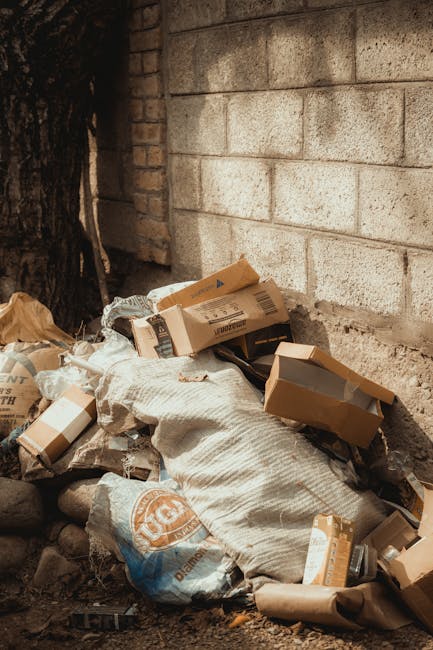
Hidden fees to avoid when booking rubbish removal in Morden

Booking rubbish removal should feel straightforward. You want the waste gone, the price clear, and the job done without fuss. Yet the bit that catches people out is rarely the headline quote. It is the hidden extras tucked into the small print, or mentioned only after someone has already turned up. If you are comparing options in Morden, knowing the hidden fees to avoid when booking rubbish removal in Morden can save you money, time, and a fair amount of annoyance.
Let's face it: most people do not book waste clearance every week. That makes it easier for unclear pricing to slip through. A good company should be transparent from the start, but you still need to know what to ask, what to watch for, and where the usual traps sit. In this guide, we will walk through the common charges, how rubbish removal pricing usually works, and the practical checks that help you avoid paying more than you should.
Quick takeaway: the best way to avoid surprise charges is to compare like-for-like quotes, describe your waste honestly, confirm access details, and ask what is included before you book. Simple enough, but it matters.
Why hidden fees to avoid when booking rubbish removal in Morden Matters
Hidden fees are more than a pricing nuisance. They can change the whole experience. A quote that looked tidy on screen can become awkward the moment the team arrives and the driver says there is an extra charge for stairs, a mattress, mixed waste, or a van that is "almost full." That is where the frustration starts.
In Morden, as in much of South West London, many homes and business premises come with access quirks: narrow drives, basement levels, shared hallways, flats with no lift, or parking that is fine until a refuse vehicle tries to stop there. None of that is unusual. But it does mean the quote has to reflect reality, not an idealised version of it.
When fees are unclear, you can end up doing the hard work twice: first gathering quotes, then arguing over the bill. That is avoidable. And to be fair, most of the time the extra cost is not evil or random; it is usually tied to a real factor such as weight, labour, disposal category, or access. The problem is when nobody explains that properly before the job is booked.
If you want a more structured starting point before comparing prices, the page on pricing and quotes is a useful reference point for how clearer waste pricing should be presented.
How Hidden fees to avoid when booking rubbish removal in Morden Works
Rubbish removal pricing often begins with one of three approaches: volume-based pricing, item-based pricing, or a combination of the two. That sounds simple, but the final bill can still change if the waste is heavier than expected, difficult to remove, or needs special handling. Some companies also add surcharges for out-of-hours collection, restricted access, or specific waste streams.
Here is the usual flow. You describe the waste, the provider estimates the cost, and then the team confirms the price on site after seeing the load. If the description was accurate, that should be smooth. If not, you may be quoted a revised figure. The key is transparency on both sides.
Typical hidden fees to watch for include:
- Minimum charge surprises where a small load still costs more than expected.
- Labour fees for carrying waste upstairs, down narrow steps, or from a rear garden with awkward access.
- Heavy item surcharges for dense materials, soil, rubble, or builder's waste.
- Mattress, appliance, or specialist item fees where disposal costs differ from general household rubbish.
- Congestion or parking-related charges if a vehicle has to wait, park farther away, or make repeated trips.
- Late changes if the actual load differs from what was originally described.
In the real world, a quote often changes because the customer said "a bit of rubble and some old furniture," but the job turns out to include plasterboard, a fridge, and a wet carpet rolled into one heavy heap. That kind of mismatch can happen. It is why good providers ask questions before they price the job.
It is also worth checking whether the company explains how recycling, sorting, and disposal are handled. Some waste streams are simply more costly to process, and that should be made clear up front. Pages such as recycling and sustainability and what can go in a skip can help you think through what material is likely to affect pricing.
Key Benefits and Practical Advantages
Spotting hidden fees early gives you more than savings. It makes the whole booking cleaner and calmer. You are not chasing the provider, they are not having to renegotiate under pressure, and the waste gets cleared without an awkward conversation at the kerb.
- Better budgeting: you know the likely total before the team arrives.
- Fewer disputes: there is less room for "I thought that was included."
- Faster clearance: crews can get on with the job instead of pausing to clarify extras.
- Fairer comparisons: you can compare providers on substance, not just a cheap-looking headline price.
- Less stress: especially useful if you are clearing a flat, garage, loft, or office on a tight deadline.
A smaller but important benefit: it helps you choose the right service. A garden clearance is not the same as a builders' waste job. A sofa and mattress collection is not the same as mixed office rubbish. Matching the service to the waste type usually leads to a more accurate quote in the first place.
If you are dealing with a specific kind of load, the relevant service pages can also help you check what is usually involved, such as garden clearance, house clearance, or office clearance.
Who This Is For and When It Makes Sense
Truth be told, almost anyone booking rubbish removal can benefit from this, but it is especially important if you are:
- moving out of a flat or house in Morden
- clearing a loft, garage, or shed full of mixed items
- finishing a renovation with bags of rubble, timber, and plasterboard
- disposing of bulky items like sofas, mattresses, or white goods
- running a local business that needs office or commercial waste cleared quickly
- booking on behalf of a landlord, tenant, letting agent, or property manager
The more variable the waste, the more room there is for extra charges. A single mattress is usually easy to price. A whole flat clearance with stairs, mixed furniture, and a few odd bits in the kitchen? That takes more care. If you are in that middle ground where the job is neither tiny nor straightforward, ask more questions than you think you need.
That is not being difficult. It is being sensible.
Step-by-Step Guidance
1. Describe the waste clearly
Start with the basics: what you have, roughly how much of it there is, and where it is located. Mention anything awkward, heavy, wet, broken, contaminated, or likely to need extra labour. The more honest your description, the less likely you are to be surprised later.
2. Separate the waste by type
Try to break the job into categories: furniture, general rubbish, garden waste, builders' waste, appliances, and anything that could be considered hazardous. A pile of mixed items is harder to price neatly, so this one step can make a big difference.
3. Check access before you book
Access matters more than people expect. Ask yourself: is there parking nearby, are there stairs, is there a lift, is the waste in a back garden, do you need a long carry from the road? Those details affect labour time, and labour time affects cost.
4. Ask what is included in the quote
This is where hidden fees often live. Confirm whether the price includes loading, disposal, VAT if applicable, congestion-related issues, and any item-specific surcharge. If something is not included, ask how it is priced.
5. Confirm how revisions are handled
If the team arrives and finds more waste than expected, what happens next? Will they re-quote before starting? Will they charge by the extra cubic yard, by weight, or by item? It is much better to know that before they knock on the door.
6. Ask for the final price trigger
Some providers only confirm a final price after seeing the load. That is not automatically a problem. What matters is whether the criteria for adjusting the quote are explained clearly. If they are not, pause. Ask again. It's your money.
7. Keep a record of the agreement
A text, email, or online booking summary can be very helpful if there is later confusion. It does not have to be dramatic. Just a clear record of what was agreed and what was not.
Expert Tips for Better Results
Here are the little things that make a surprisingly big difference, and most people only learn them after one slightly messy booking.
- Take a few photos before you request a quote. Good photos often reveal item mix, volume, and access issues better than a short description.
- Be specific about heavy materials. Rubble, soil, broken tiles, and wet waste can alter pricing far more than lightweight rubbish.
- Ask about separation before collection. If you can keep recyclable items separate, the quote may be simpler and the disposal route clearer.
- Check whether dismantling is included. Flat-pack furniture is one thing; an old wardrobe that needs taking apart is another.
- Beware of unusually cheap prices. If a quote is far below the others, there is usually a reason. Sometimes it is genuine efficiency. Sometimes it is a missing charge waiting to appear later.
A small, practical habit helps too: write down three questions before you call. What is included? What could change the price? And what happens if the load is slightly different from the photos? That one minute of prep can save a lot of back-and-forth.
If the job involves delicate or sensitive materials, take extra care. For example, confidential papers may need separate handling via confidential shredding, while electrical items and appliances may need different arrangements. For appliance-related jobs, see fridge and appliance removal.
Common Mistakes to Avoid
Most surprise charges come from a small set of avoidable mistakes. The good news? They are easy enough to sidestep once you know what to look for.
- Choosing the cheapest quote without checking the details. Low headline prices can hide loading charges, disposal supplements, or minimum fees.
- Underestimating volume. People often think a pile looks smaller than it really is. That is normal, but it can distort the price.
- Ignoring access issues. A third-floor flat with no lift is not the same as a driveway job. No surprise there, really.
- Forgetting about special items. Mattresses, fridges, sofas, and hazardous materials often sit in different pricing brackets.
- Assuming "all rubbish" means all waste types. Some items need separate handling, and that can change the cost.
- Not asking about waiting time. If the crew arrives and cannot start immediately, charges may apply.
One funny little truth: the smallest item can cause the biggest pricing headache. A single awkward fridge can be more complicated than half a van of cardboard. That is the sort of thing people only discover on collection day, when everyone is already standing outside.
Tools, Resources and Recommendations
You do not need complicated tools to avoid hidden fees. A phone camera, a measuring tape, and a quick checklist are usually enough. Still, there are a few useful resources on the site that can help you understand what to expect before booking.
- Pricing and quotes for understanding how the pricing process is framed.
- Payment and security if you want reassurance about how payment is handled.
- Insurance and safety for a better sense of how responsible operators should manage risk.
- Health and safety policy when you want the basics of safe working to be clearly set out.
- Recycling and sustainability if you care about what happens after the waste leaves your property.
For households with larger clearances, the pages on flat clearance, home clearance, and garage clearance can help you think through the likely scope before you request a quote.
Law, Compliance, Standards, or Best Practice
Waste removal is not just about price; it is also about how the waste is handled once collected. In the UK, good practice means using an operator that disposes of waste responsibly, handles different waste types properly, and does not cut corners on duty of care. You do not need to know every technical detail to protect yourself, but you should expect clear communication and sensible handling.
Best practice usually includes:
- being clear about what types of waste are accepted
- explaining any restricted or hazardous items before booking
- describing how pricing changes if the waste description changes
- handling payment securely and transparently
- communicating whether the job requires extra labour or specialist disposal
For hazardous or sensitive items, the answer should never be a vague shrug. If something is unsafe, regulated, or not suitable for general rubbish removal, it should be identified early. That is why a page like hazardous waste disposal is helpful: it signals that not all waste belongs in the same pile. That sounds obvious, but it is exactly where people get caught out.
Also, a trustworthy provider should have clear public information about terms, payment, complaints, and policies. Not because you plan to use them, hopefully, but because it shows the business is organised. Have a look at the terms and conditions and the complaints procedure if you want that extra reassurance before you book.
Options, Methods, or Comparison Table
Different booking methods suit different jobs. Here is a simple comparison to help you spot where hidden fees are most likely to appear.
| Booking method | Best for | Typical risk of hidden fees | What to check |
|---|---|---|---|
| Fixed quote after photos | Clear, visible waste with decent access | Low to medium | Ask whether stairs, heavy items, and VAT are included |
| Estimate over the phone | Small, straightforward jobs | Medium | Confirm what could trigger a revised price |
| On-site pricing | Mixed or awkward clearances | Medium to high | Make sure the final price is explained before work begins |
| Per-item pricing | Single items or a small list of bulky goods | Low to medium | Check charges for extras like dismantling or carrying distance |
In plain English, fixed quotes are usually easiest to budget for, but only if the description is accurate. On-site pricing can work well too, especially for odd-shaped jobs, as long as the provider explains how they arrive at the figure. The awkward bit is never the method itself; it is the lack of clarity around it.
Case Study or Real-World Example
A homeowner in Morden booked rubbish removal for what they thought was a straightforward garage clear-out. The initial description was "old shelves, a few bags, and some broken bits." On arrival, the team found a heavier load: an old freezer, damp cardboard, paint tins, and a stack of broken paving slabs tucked behind the bikes.
Now, this is exactly the kind of situation where a revised quote can be fair. The issue was not the change in price itself. The issue would have been surprise. In this case, the cleaner approach was a quick review before lifting started, with the new items clearly identified and the price explained. No drama. No hard sell. Just an adjusted quote that matched the work.
What made it work? The customer had taken photos, but they had missed the stuff at the back. The provider asked the right questions and flagged the change early. That little bit of honesty on both sides kept the job smooth. Not glamorous, but effective. And honestly, that is what most people want from rubbish removal.
If the job had involved white goods or old furniture instead, the customer might also have needed specialised services such as furniture disposal or mattress and sofa disposal, depending on the exact items involved.
Practical Checklist
Use this checklist before you confirm the booking. It is a small thing, but it helps.
- Have I described all waste types honestly?
- Have I sent photos or dimensions where useful?
- Have I mentioned stairs, lifts, narrow access, parking, or garden access?
- Have I asked what the quote includes?
- Have I checked for charges on heavy, bulky, or specialist items?
- Have I asked whether VAT or disposal fees are included?
- Have I confirmed how price changes are handled if the load differs?
- Have I asked about payment method and timing?
- Do I have the quote in writing?
- Do I know who to contact if something is unclear on the day?
Expert summary: the cheapest quote is not always the cheapest job. The cleanest quote is the one that tells you, clearly and in advance, what you are paying for and why. That is the real money-saver.
When you are ready to book, you can start by exploring the site's service information or move straight to book online if you already know what you need.
Get a free quote today and see how much you can save.
Conclusion
Hidden fees are rarely dramatic on their own. A small labour surcharge here, a mattress fee there, a revised price because the load was heavier than expected. But together they can turn a simple rubbish removal booking into an unexpectedly expensive one. That is why being specific, asking direct questions, and comparing quotes properly matters so much in Morden.
If you remember only one thing, make it this: a good rubbish removal quote should make sense before the van arrives. If it does not, keep asking until it does. No rush, no apology needed. You are entitled to clarity.
And once you have that clarity, the rest tends to feel a lot lighter. Literally and mentally.
Frequently Asked Questions
What hidden fees should I ask about before booking rubbish removal in Morden?
Ask about labour charges, stairs, access issues, heavy-item surcharges, mattress or appliance fees, VAT, waiting time, parking-related costs, and any disposal supplements. Those are the usual suspects.
Why does a rubbish removal quote change after the team arrives?
Usually because the actual waste differs from the description. It might be larger, heavier, more mixed, or harder to access than expected. A fair provider should explain the reason clearly before proceeding.
Is a cheap rubbish removal quote a bad sign?
Not always, but it deserves a closer look. Very low quotes can be genuine, yet they can also leave out key charges. Compare what is included, not just the headline number.
How can I avoid extra charges for access problems?
Tell the provider about stairs, lifts, parking distance, garden access, or any narrow hallway before booking. Photos help too. A minute spent explaining access can save a lot later.
Do bulky items like sofas or mattresses usually cost more?
Often yes, because they can require different handling or disposal routes. If you have these items, mention them early and check whether they are priced separately.
Are builder's waste and household rubbish priced the same?
Usually not. Builders' waste can be heavier and may include materials with different disposal costs. If you have rubble, plasterboard, or mixed renovation waste, ask for a specific quote.
Should I expect VAT to be included in the price?
Only if the provider says so. Never assume. Always ask whether the quote is inclusive or exclusive of VAT so the final number does not catch you out.
What if I am not sure how much rubbish I have?
Send photos, estimate by room, or describe the items in plain language. Good waste companies can often work with that. If it is still unclear, ask for a site-based estimate or a revised quote process.
Can I reduce the cost by sorting items myself?
Sometimes yes. Separating reusable furniture, general waste, garden waste, and special items can make pricing simpler and may reduce labour time. Just make sure you sort safely and realistically.
How do I know if a provider is transparent about pricing?
They should answer questions directly, explain what is included, outline what could change the price, and provide a clear written quote or booking summary. If the answers stay vague, that is a warning sign.
What should I do if I think I was overcharged?
First, check the written quote, booking notes, and any messages you exchanged. Then raise the issue calmly with the provider using their complaints process. A clear paper trail makes that conversation much easier.
Is rubbish removal in Morden suitable for flat clearances and office clearances too?
Yes, but the pricing can vary depending on access, volume, and waste type. A flat clearance or office clearance often needs more detail than a single-item collection, so the quote should reflect that.